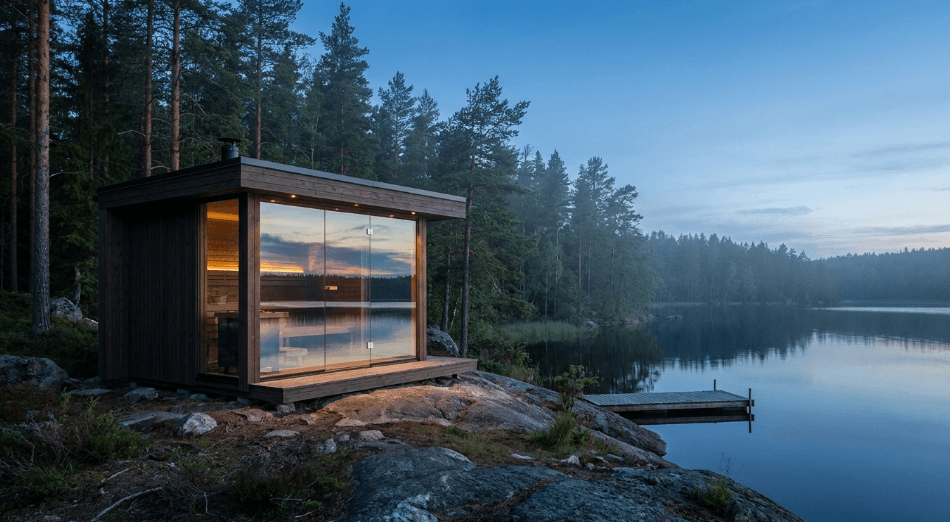
A first outdoor sauna purchase comes down to five decisions: wood species, heater type and size, capacity, site readiness, and warranty terms. Get those right and most other choices, color, trim, window style, are just preference. Get the heater sizing or site prep wrong, and you end up with a structure that never reaches a comfortable temperature or fails inspection.
What wood should the structure be built from?
Kiln-dried lumber matters more than species for a first buy, since properly dried wood resists the warping and checking that happens when green or air-dried lumber sits in a hot, humid sauna environment. Within kiln-dried options, Western red cedar is the traditional premium choice for its natural rot and insect resistance, Nordic white spruce is a lighter-cost alternative with a tight, pale grain, and thermally modified aspen or poplar has become popular for benches specifically because the heat-treatment process makes it resistant to warping right where skin contact and moisture are highest. A beginner does not need to overthink this: any of the three, kiln-dried and sourced from a manufacturer that states moisture content, will perform well.
Electric or wood-fired heater?
Electric heaters are the more forgiving choice for a first sauna. They reach a set temperature automatically, hold it consistently, and only require a properly sized 220 to 240-volt circuit, commonly in the 30 to 50 amp range depending on the heater’s kilowatt rating. Wood-fired heaters need no electrical connection at all, which suits a remote site, but they demand more attention: loading the firebox, maintaining a bed of hot coals, and respecting published clearances to combustible materials for both the stove and the chimney. First-time owners without prior wood-stove experience generally have an easier time with electric.
How much capacity do you actually need?
Sizing rule of thumb: roughly 15 to 20 cubic feet of interior space per person for comfortable seating, with a typical ceiling height around 6.5 to 7 feet. A two-person barrel sauna commonly runs 150 to 200 cubic feet, while a four- to six-person cabin model often runs 300 to 450 cubic feet. Heater kilowatt rating needs to scale with that volume, roughly 1 kilowatt per 45 to 55 cubic feet as a general guide, so a bigger cabin needs a proportionally bigger heater and a proportionally bigger electrical circuit, not just a taller stack of stones.
Is the site actually ready for a sauna?
Before ordering, confirm three things: a level, well-drained foundation area, whether gravel pad, concrete pad, or existing deck; a path for the electrical run if going electric, since a long run from the panel adds real installation cost; and the manufacturer’s stated clearances to fences, structures, and any roof overhang for snow load in colder climates. Skipping this step is the single most common reason a sauna purchase turns into a stalled backyard project. Buyers comparing current models by wood type, heater size, and price can review published dimensions and kilowatt specs side by side at SweatDecks, one specialty retailer that lists both electric and wood-fired options, before finalizing a footprint.
What does the warranty actually need to cover?
Split your expectations between the wood structure and the heater. A well-built cedar or spruce shell should carry a structural warranty of several years, since the wood itself is the least likely part to fail. The heater, being a mechanical and electrical component, typically carries a shorter separate warranty, often one to three years, and it is worth confirming whether that warranty is handled by the sauna manufacturer directly or passed through to a third-party heater maker, since that affects how a claim actually gets resolved.
What accessories actually matter for a first-time buyer?
Beyond the structure and heater, a handful of accessories make a real difference in day-to-day use rather than just looking nice. A wall-mounted thermometer and hygrometer let you track actual temperature and humidity instead of guessing, which helps calibrate session length as a beginner. A backrest angles the upper body away from the hottest air near the ceiling, making longer sessions more comfortable on the upper bench. LED lighting rated for high-heat, high-humidity environments is worth choosing over a standard fixture, since ordinary household lighting is not built for the conditions inside a running sauna. None of these are essential to get started, but they are inexpensive relative to the unit cost and worth budgeting for alongside the initial purchase.
Is there real evidence behind sauna use, or is it just tradition?
There is a reasonably solid body of observational research here, though it comes with real limits. A widely cited Mayo Clinic Proceedings review found regular sauna bathing associated with lower cardiovascular mortality risk in Finnish cohort studies, and a systematic review in Evidence-Based Complementary and Alternative Medicine found consistent associations between sauna use and improvements in several cardiovascular risk markers. It is worth being precise about the word “associated”: these are large cohort studies, not randomized controlled trials proving causation, and people who sauna regularly may differ from those who do not in other health habits too. Sauna bathing also carries real contraindications, including unstable angina, a recent heart attack, and pregnancy, which anyone with a relevant health condition should discuss with a doctor before starting regular use.
Frequently Asked Questions
What wood is best for an outdoor sauna?
Kiln-dried Nordic spruce, Western red cedar, and thermally modified aspen are the three most common choices. Cedar resists rot and insects naturally, spruce is lighter on cost, and thermally modified wood resists warping in humid, high-heat conditions.
Should a beginner buy an electric or wood-fired heater?
Electric heaters are simpler for a first sauna since they reach temperature automatically and need only a properly sized circuit, while wood-fired heaters need no electrical hookup but require more hands-on tending and a flue with proper clearance.
How long does a kit-built outdoor sauna take to assemble?
Most prefabricated barrel or cabin kits go up in a weekend or two with two people and basic tools, though foundation prep and any electrical run for the heater should happen before the kit arrives.
Do outdoor saunas need a permit?
Requirements vary by municipality. A dedicated electrical circuit for the heater commonly needs a permit and inspection, and some jurisdictions also require a building permit once the structure passes a certain square footage.
What warranty should I expect on an outdoor sauna kit?
Reputable manufacturers typically warranty the wood structure for several years against defects and the heater separately, often one to three years, since the heater is a mechanical part with its own wear profile.
References
- Cardiovascular and Other Health Benefits of Sauna Bathing: A Review of the Evidence, Mayo Clinic Proceedings, 2018. https://pubmed.ncbi.nlm.nih.gov/30077204/
- Clinical Effects of Regular Dry Sauna Bathing: A Systematic Review, Evidence-Based Complementary and Alternative Medicine, 2018. https://pubmed.ncbi.nlm.nih.gov/29849692/
- Benefits and risks of sauna bathing, The American Journal of Medicine, 2001. https://pubmed.ncbi.nlm.nih.gov/11165553/
By Lauren WhitfieldStructured data (JSON-LD)